Centrum wiedzy
Insighty z Europy
Eksperckie artykuły o pracy, wynagrodzeniach, relokacji i wizach w całej Europie — napędzane analizami AI.
Płaca minimalna w Niemczech w 2026 roku: 13,90 euro za godzinę, wyjaśnione
Od 1 stycznia 2026 roku ogólna ustawowa płaca minimalna w Niemczech wzrosła do 13,90 euro za godzinę. Sprawdź, kogo obejmuje ta stawka, jak mogą się od niej różnić płace branżowe i co warto zweryfikować w umowie o pracę przed wyjazdem do Niemiec.
European Labour Costs Are Rising Fast: The Q1 2026 Numbers
Hourly labour costs across the EU rose 3.6% in Q1 2026, with construction posting the fastest sector gain at 4.2%, according to Eurostat's Labour Cost Index. Here is what the data shows.
European Wages and Labour Costs: A Country-by-Country Breakdown
Eurostat data shows hourly labour costs ranging from €12 in Bulgaria to €56.8 in Luxembourg in 2025, with wide gaps in median earnings and low-wage rates across EU member states.
What Employers Pay Per Hour in Each EU Country: 2025 Labour Cost Data
In 2025, hourly labour costs across the EU ranged from €12.0 in Bulgaria to €56.8 in Luxembourg. Here is what Eurostat's figures show by country, growth rate and sector.
Where Labour Costs Are Rising Fastest in Europe
Hourly labour costs rose 3.6% across the EU in Q1 2026, but the spread between countries is wide - Hungary recorded a 16.4% jump while Malta saw just 1.3%. Here is what the Eurostat data shows by country and sector.
Where Does Minimum Wage Go Further in Europe? The Purchasing Power Ranking
Nominal minimum wages in the EU range from €620 to €2,771 per month - but after adjusting for local prices, the ranking shifts significantly. Here is where minimum wage actually buys the most.
The Gender Pay Gap in Europe: Where It Is Smallest and What It Means for Your Offer
The unadjusted gender pay gap across the EU averaged 11.1% in 2024, but the picture varies widely by country, sector and age. Here is what Eurostat data shows - and what it means when you negotiate.
EU Minimum Wage vs Median Salary: How Big Is the Gap by Country?
In EU countries with a national minimum wage, the minimum wage represents between 44% and 69% of median gross earnings. Here is what Eurostat data for reference year 2024 shows, country by country.

What Your Employer Actually Pays on Top of Your Gross Salary - Country by Country
Your gross salary is not the full amount your employer spends on your hire. Eurostat data shows how much more employers pay in non-wage contributions across EU countries - and the gap between countries is wide.
Gdzie najlepiej zarabiać w Europie? Ceny i praca za granicą
Ceny towarów i usług codziennego użytku różnią się znacznie między krajami UE, od Bułgarii, 37% poniżej średniej unijnej, do Danii, 40% powyżej niej. Oto co dane Eurostatu o poziomie cen za 2025 rok oznaczają dla osób szukających pracy za granicą i porównujących oferty między krajami.
France SMIC June 2026: What the New Minimum Wage Actually Pays Net vs Gross
France raised its minimum wage by 2.41% on June 1, 2026. The new monthly gross is 1,867.02 euros and the estimated net is 1,477.93 euros. Here is what job seekers need to know before accepting a French minimum-wage offer.
Where in Europe You Keep the Most of Your Salary: Tax Wedge by Country (2025)
According to 2025 Tax Foundation data, the tax wedge on labour in Europe ranges from 26.41 percent in Cyprus to 50.81 percent in Belgium. Here is which countries take the most from your pay - and which leave the most in your pocket.
Zarobki w Europie według krajów: gdzie płaca jest najwyższa, a gdzie pieniądze sięgają najdalej
Dane Eurostatu pokazują, że mediana zarobków godzinowych w krajach UE w 2022 roku wahała się od 4,1 EUR do 29,8 EUR. Ten przewodnik pokazuje, gdzie zarobki w Europie są najwyższe, gdzie najniższe i gdzie realna siła nabywcza pensji jest największa po uwzględnieniu kosztów życia.
Germany's Minimum Wage in 2026: What It Means for Your Monthly Pay and Mini-Jobs
Germany's statutory minimum wage rose to 13.90 euros gross per hour in 2026 and is set to increase again in 2027. Here is what workers, mini-job holders, and interns need to know.
Najniższa krajowa w Holandii 2026: stawki godzinowe według wieku
Ustawowa najniższa krajowa w Holandii dla pracowników od 21 lat wynosi 14,71 euro brutto za godzinę w pierwszej połowie 2026 roku. Sprawdź, jak stawka zmienia się w zależności od wieku, także dla studentów na praktykach BBL.
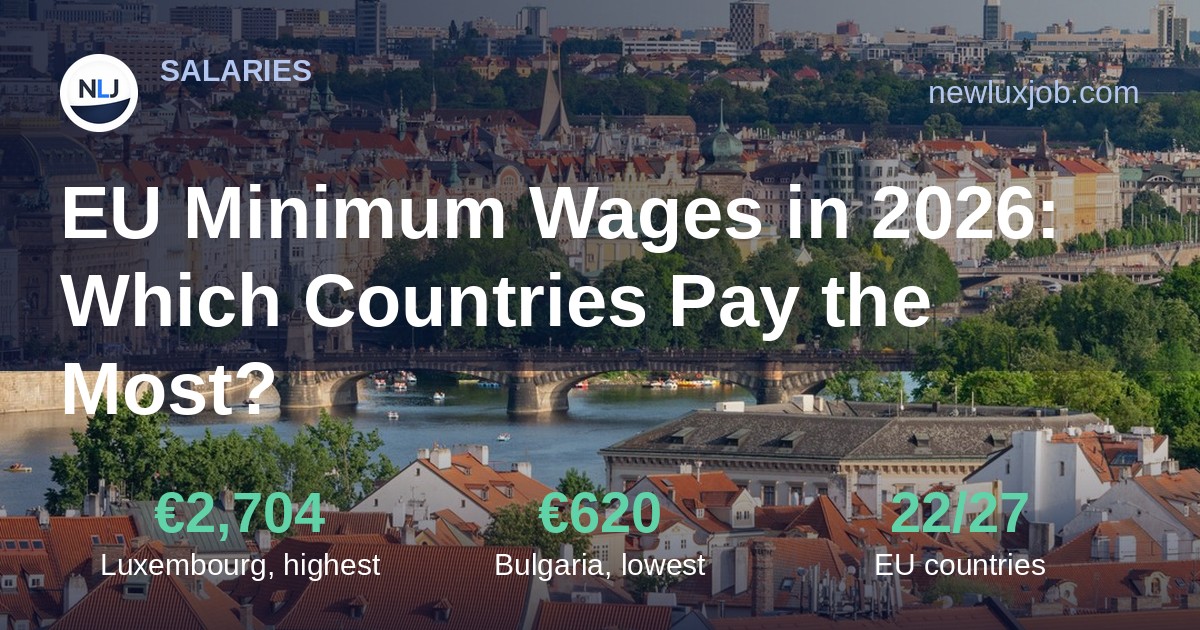
EU Minimum Wages in 2026: Which Countries Pay the Most?
According to Eurostat, 22 out of 27 EU member states had a national minimum wage in 2026, ranging from €620 in Bulgaria to €2,704 in Luxembourg. Here is a full country-by-country breakdown, including purchasing power comparisons.

Negocjowanie wynagrodzenia w Luksemburgu: Praktyczny przewodnik na 2026 rok
Konkretny, dostosowany do realiów Luksemburga poradnik na 2026 rok: które elementy wynagrodzenia są naprawdę negocjowalne, które są ustalone przez prawo lub indeks, oraz taktyki, które pozwalają podnieść stawkę.

Średnie wynagrodzenia w Luksemburgu według branży: przedziały brutto na 2026 rok
Praktyczny przewodnik po wynagrodzeniach brutto na 2026 rok w Luksemburgu według branży, indeksowanej płacy minimalnej, potrąceniach oraz sposobach oceny oferty przed podpisaniem umowy.