Jobs Europe Cannot Fill: Shortage Occupations and Who Is Hiring Foreign Candidates

How big is the shortage?
The European Commission has identified 42 occupations where demand consistently outpaces supply across the EU. These span healthcare, transport, hospitality, and the growing digital and green sectors. A common factor: existing workforces are approaching retirement, while fewer younger workers are trained to replace them.
The European Labour Authority, which publishes through the EURES network, notes that candidates from across the EU are likely to be in demand in several of these areas - making this a practical moment to look at cross-border opportunities or a career shift.
Truck drivers: rising pay and public subsidies for training
Transport is one of the clearest shortages. Industry data cited by FreightConnections showed a shortfall of 400,000 heavy truck drivers in Europe in 2022, with the average driver age already over 50 at that point. The 2024 report from the International Road Transport Union (IRU) found that driver shortages meant half of European truck operators could not expand their business.
For job seekers, the pay picture has strengthened. The same 2024 IRU report found the average European truck driver salary was 55% higher than the national minimum wage - rising to 133% above it in the Netherlands.
Several countries have moved to subsidize entry into the role. In Italy, regional and national measures reimburse 80% of the cost of driver training and qualifications. In Denmark, a social responsibility fund supports new entrants, including access to driving simulators.
Healthcare: doctors, nurses, and care assistants
Healthcare workers appear on the EU shortage list across multiple roles: general practitioners, specialist doctors, nurses, and healthcare assistants. Demand will grow as the population ages, while a large share of current healthcare workers are nearing retirement - a double pressure that makes this one of the more durable shortages on the list.
Some countries have taken targeted steps. Latvia has offered extra support for rural general practitioners to address regional gaps. Sweden has invested to expand the capacity of its health services. EURES advisers can help candidates identify training routes and find out where healthcare profiles are in demand across member states.
Digital and green jobs
The EU's shift toward digital and green technologies is creating demand for workers in fields that are still developing.
On the digital side, a 2023 report on skills transitions projected strong demand for ICT professionals through 2035. More than 70% of European businesses have said that a lack of digitally-qualified staff is holding back investment. The European Commission has allocated €1.3 billion for digital skills and critical technologies, including AI.
For green roles, the EURES source points to likely new openings in construction, architecture, energy, and engineering as the EU pursues its climate commitments under the European Green Deal.
How to find and qualify for a shortage role
EURES - the EU's cross-border employment network - runs a network of advisers who can point job seekers toward specific training schemes, identify where their skills are in demand, and support applications and language preparation across EU countries. The EURES portal also lists which jobs are in demand by country, giving candidates a direct way to match their profile to open markets before committing to a move.
For job seekers willing to train or relocate, the 42 shortage occupations represent a documented, policy-backed set of targets - fields where the hiring pressure is real and some governments are actively funding the path in.
Поделиться статьёй
База знаний
Попробуйте ИИ-коуча NewLuxJob
Получайте персональную карьерную ИИ-сводку в личном кабинете NewLuxJob
Начать бесплатноПохожие статьи
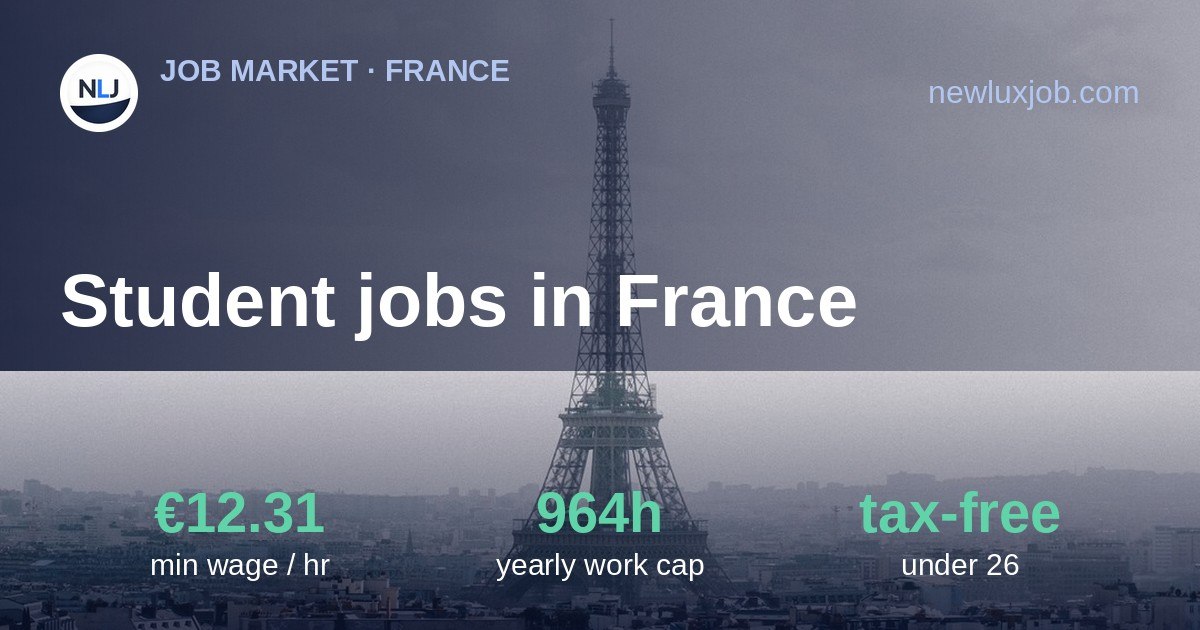
Student jobs in France: hours, pay, and how to find one in 2026
Working while studying in France, explained: the 964-hour rule, what you earn on the minimum wage, the contracts to look for, and where to find openings now.
Where the open jobs are in Spain, 21 September 2026
9 sections, 5 633 open jobs, counted on 21 September 2026. Every link goes to the page the number came from.