Kenniscentrum
Europese inzichten
Expertartikelen over banen, salarissen, verhuizen en visa in heel Europa — aangedreven door AI-onderzoek.

Germany's Minimum Wage in 2026: 13.90 Euros an Hour, Explained
Germany's general statutory minimum wage rose to 13.90 euros an hour from 1 January 2026. Here is who the floor applies to, how sector-specific rates can differ, and what to check in a job contract before moving to Germany for work.

European Labour Costs Are Rising Fast: The Q1 2026 Numbers
Hourly labour costs across the EU rose 3.6% in Q1 2026, with construction posting the fastest sector gain at 4.2%, according to Eurostat's Labour Cost Index. Here is what the data shows.
European Wages and Labour Costs: A Country-by-Country Breakdown
Eurostat data shows hourly labour costs ranging from €12 in Bulgaria to €56.8 in Luxembourg in 2025, with wide gaps in median earnings and low-wage rates across EU member states.
What Employers Pay Per Hour in Each EU Country: 2025 Labour Cost Data
In 2025, hourly labour costs across the EU ranged from €12.0 in Bulgaria to €56.8 in Luxembourg. Here is what Eurostat's figures show by country, growth rate and sector.
Where Labour Costs Are Rising Fastest in Europe
Hourly labour costs rose 3.6% across the EU in Q1 2026, but the spread between countries is wide - Hungary recorded a 16.4% jump while Malta saw just 1.3%. Here is what the Eurostat data shows by country and sector.
Where Does Minimum Wage Go Further in Europe? The Purchasing Power Ranking
Nominal minimum wages in the EU range from €620 to €2,771 per month - but after adjusting for local prices, the ranking shifts significantly. Here is where minimum wage actually buys the most.
The Gender Pay Gap in Europe: Where It Is Smallest and What It Means for Your Offer
The unadjusted gender pay gap across the EU averaged 11.1% in 2024, but the picture varies widely by country, sector and age. Here is what Eurostat data shows - and what it means when you negotiate.
EU Minimum Wage vs Median Salary: How Big Is the Gap by Country?
In EU countries with a national minimum wage, the minimum wage represents between 44% and 69% of median gross earnings. Here is what Eurostat data for reference year 2024 shows, country by country.

What Your Employer Actually Pays on Top of Your Gross Salary - Country by Country
Your gross salary is not the full amount your employer spends on your hire. Eurostat data shows how much more employers pay in non-wage contributions across EU countries - and the gap between countries is wide.

Where Your Salary Stretches Furthest in Europe
Prices for everyday goods and services vary widely across EU countries - from Bulgaria, 37% below the EU average, to Denmark, 40% above it. Here is what Eurostat's 2025 price level data means for job seekers comparing offers across borders.

France SMIC June 2026: What the New Minimum Wage Actually Pays Net vs Gross
France raised its minimum wage by 2.41% on June 1, 2026. The new monthly gross is 1,867.02 euros and the estimated net is 1,477.93 euros. Here is what job seekers need to know before accepting a French minimum-wage offer.
Where in Europe You Keep the Most of Your Salary: Tax Wedge by Country (2025)
According to 2025 Tax Foundation data, the tax wedge on labour in Europe ranges from 26.41 percent in Cyprus to 50.81 percent in Belgium. Here is which countries take the most from your pay - and which leave the most in your pocket.
Average Salaries Across Europe by Country: Which Pay the Most - and Where Earnings Go Furthest
Eurostat data shows median hourly wages ranging from €4.1 to €29.8 across EU countries in 2022. This guide breaks down where pay is highest, where it is lowest, and where salaries actually go furthest once cost of living is factored in.

Germany's Minimum Wage in 2026: What It Means for Your Monthly Pay and Mini-Jobs
Germany's statutory minimum wage rose to 13.90 euros gross per hour in 2026 and is set to increase again in 2027. Here is what workers, mini-job holders, and interns need to know.

Dutch Minimum Wage in 2026: Hourly Rates by Age and What Students Earn
The Dutch statutory minimum hourly wage for workers aged 21 and over is €14.71 gross in the first half of 2026. Here is how the rate works across different age groups, including students on BBL vocational placements.
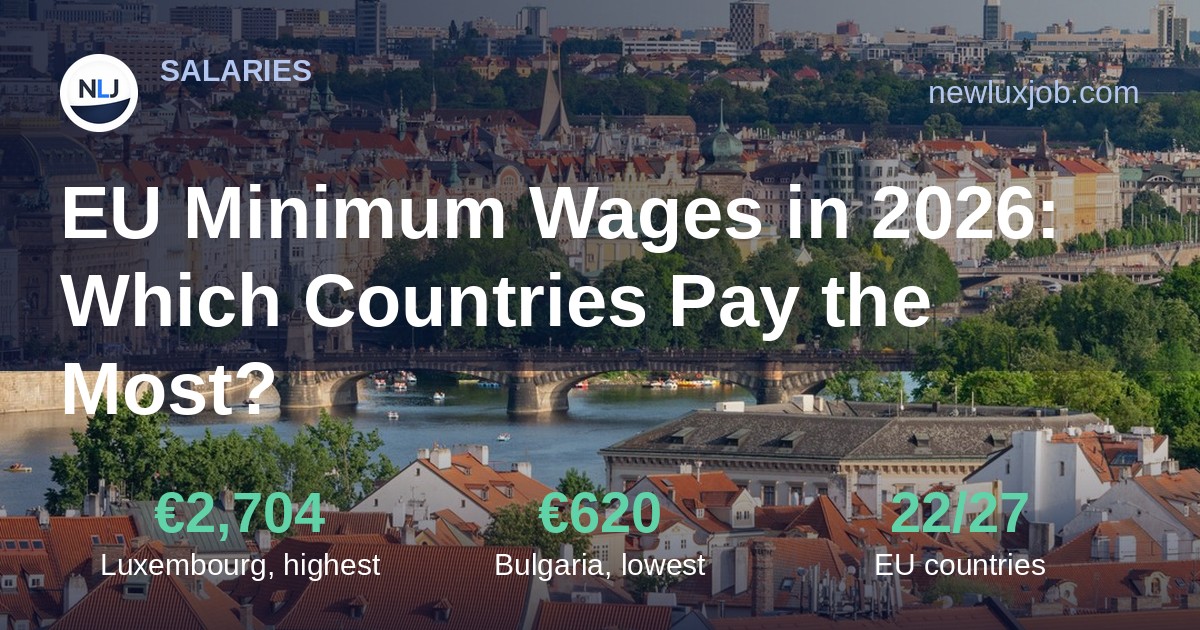
EU Minimum Wages in 2026: Which Countries Pay the Most?
According to Eurostat, 22 out of 27 EU member states had a national minimum wage in 2026, ranging from €620 in Bulgaria to €2,704 in Luxembourg. Here is a full country-by-country breakdown, including purchasing power comparisons.

Salarisonderhandeling in Luxemburg: Een Praktische Gids voor 2026
Een concreet, op Luxemburg toegespitst stappenplan voor 2026: welke onderdelen van je salaris zijn daadwerkelijk onderhandelbaar, welke zijn vastgelegd door de wet of het indexsysteem, en welke tactieken zorgen ervoor dat het bedrag omhooggaat.

Gemiddelde salarissen in Luxemburg per sector: brutobandbreedtes 2026
Een realistische, op Luxemburg gerichte gids voor brutosalarissen per sector in 2026, het geïndexeerde minimumloon, wat er wordt ingehouden en hoe u een aanbod kunt benchmarken voordat u tekent.