Where Job Competition Is Thinnest in Europe: What the June 2026 Unemployment Data Shows
The Headline Rate
According to Eurostat, the euro area seasonally adjusted unemployment rate was 6.3% in June 2026, stable compared with May 2026 and June 2025. Across the EU's 27 member states, an estimated 13,317 thousand people met the ILO definition of unemployment that month - people without work who had actively sought employment in the last 4 weeks and were available to start within 2 weeks.
Eurostat notes that the unemployment rate is a lagging indicator: it typically takes several months to reflect changes in the broader economy.
The Gender Split
The data shows a small but consistent gap between men and women. In the EU in June 2026, the male unemployment rate was 5.9% and the female rate was 6.1%. In the euro area - which covers 21 countries - those figures were 6.2% for men and 6.4% for women.
The gap is narrow, but it runs the same direction across both country groups: men faced a slightly lower headline rate in June 2026.
Youth Unemployment: Where Competition Is Steepest
Workers under 25 face a very different market. In June 2026, the youth unemployment rate was 15.5% in the EU and 14.8% in the euro area, according to Eurostat. Around 2,987 thousand young people under 25 were unemployed across the EU that month, of whom 2,351 thousand were in the euro area.
For comparison, the overall rates by sex across the EU and euro area stood between 5.9% and 6.4%. Workers under 25 are competing in a market that is substantially harder than those figures suggest.
What Moved - and What Did Not
The 6.3% euro area rate held flat from June 2025 through June 2026. At EU level, the youth rate ticked from 15.4% in May 2026 to 15.5% in June 2026. In the euro area, the youth rate moved the other way - from 14.9% in May to 14.8% in June.
Month-on-month, these are modest shifts. The broader picture is a labour market that has not moved sharply in either direction over the past year.
What the Data Means for Job Seekers
This Eurostat release covers EU and euro area aggregates; country-level figures are not broken out in the data cited here. What the aggregate numbers do tell us:
- The gender gap is real but narrow: 5.9% vs 6.1% in the EU, and 6.2% vs 6.4% in the euro area.
- Workers under 25 face rates of 14.8% to 15.5% - the segment of the market where competition for roles is measurably the highest.
- The euro area (21 countries) and the broader EU (27 member states) show rates in a similar range, suggesting that a job search spanning multiple EU countries does not dramatically change the aggregate odds.
- The ILO methodology Eurostat uses is applied consistently across all member states, so the figures are directly comparable across borders.
If you are over 25 and searching in the EU, the headline data points to a market that has been stable for at least a year. If you are under 25, the youth rates of 14.8%-15.5% are a more honest baseline for setting expectations.
All figures are from Eurostat's monthly unemployment release for June 2026, based on the ILO standard definition.
Deel dit artikel
Bekijk de vacatures van vandaag in jouw vakgebied
AI-aangedreven
Een professionele sollicitatiebrief met AI
Kies een vacature uit je matches en krijg binnen een paar minuten een passende brief. De eerste is gratis.
Schrijf mijn briefGerelateerde artikelen
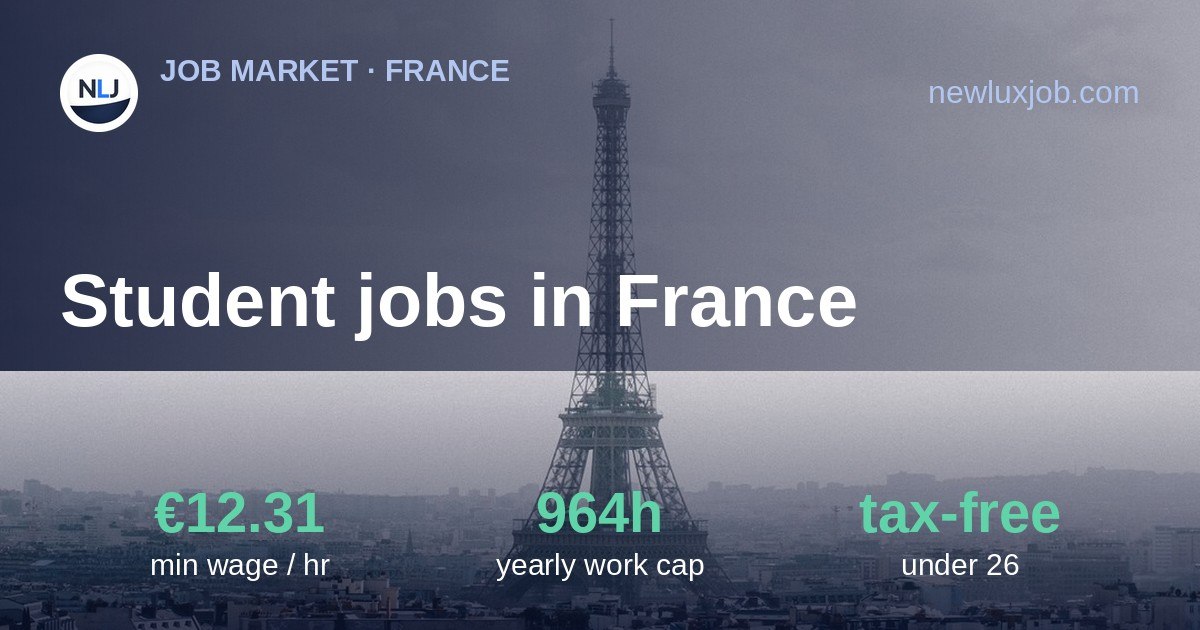
Student jobs in France: hours, pay, and how to find one in 2026
Working while studying in France, explained: the 964-hour rule, what you earn on the minimum wage, the contracts to look for, and where to find openings now.
Which jobs are open in Ireland, 15 October 2026
15 sections, 4 687 open jobs, counted on 15 October 2026. Every link goes to the page the number came from.