Who Is Working in Europe? Employment Rates by Country, Age and Education in 2025
The EU employment picture in 2025
According to Eurostat's EU Labour Force Survey, around 198 million people aged 20-64 were in employment in the EU in 2025, an employment rate of 76.1%. That is up from 69.7% in 2016 and moving toward the EU's target of 78% by 2030.
Men and women are not equally represented in the figures. The male employment rate stood at 80.9%, the female rate at 71.3% - a gap of 9.6 percentage points.
Which countries have the highest and lowest rates?
Among EU member states, 16 reported an employment rate above 78% in 2025, and 7 of those surpassed 82%. Malta led at 83.6%, followed by the Netherlands (83.4%) and Czechia (82.9%). A further 9 countries fell in the 70% to 78% range. Romania (69.0%) and Italy (67.6%) were the only two countries below 70%.
The gender gap differs sharply by country. Italy (19.1 percentage points), Romania (18.7 pp) and Greece (17.4 pp) had the largest gaps. In Italy and Romania, fewer than 60% of women were employed; in Greece the figure was 62.3%. More than 77% of men in those three countries were in work. Estonia, Finland and Latvia had gaps of around 2 pp or less. In Lithuania, women's employment rate exceeded men's by 0.6 pp.
Employment rates by age group
For people aged 55-64, the employment rate in 2025 was 72.3% for men and 60.8% for women, a gap of 11.5 pp. Both rates have risen since 2016: women in this age group gained 13.5 pp over the decade, men gained 12.2 pp.
For people aged 15-24, rates were 36.6% for men and 32.4% for women, a gap of 4.2 pp. Progress since 2016 was more modest here: +3.5 pp for men and +3.4 pp for women.
How education level affects employment
Education level has a measurable effect on employment outcomes. In 2025, people aged 20-64 with tertiary education had an employment rate of 86.8%. Those with upper secondary or post-secondary qualifications were at 75.1%, and those with at most lower secondary education were at 58.2%.
All three groups have improved since 2016. Tertiary-educated workers went from 83.2% to 86.8% (+3.6 pp). The middle group moved from 70.3% to 75.1% (+4.8 pp). The lowest-education group rose from 51.9% to 58.2% (+6.3 pp).
The gender gap in employment also widens as education level falls: 4.7 pp among highly educated workers, 11.1 pp among those with a medium level, and 22.3 pp among those with low educational attainment.
The share of tertiary-educated workers among employed people varies by country. Ireland (60.8%), Luxembourg (60.3%) and Lithuania (53.7%) had the highest shares. Romania (24.1%), Italy (26.0%) and Czechia (28.6%) had the lowest.
Over-qualification among degree holders
The EU's over-qualification rate - the share of tertiary-educated workers in roles that do not require a degree, based on standard occupational classifications - was 21.4% in 2025. For foreign citizens working in an EU country other than their own, the rate was 37.0%, compared with 20.0% for nationals of the reporting country.
Rates varied considerably across EU countries. Spain had the highest rate at 34.0%, followed by Greece (31.4%) and Cyprus (27.5%). Luxembourg had the lowest at 6.5%, with Croatia (13.0%) and Czechia (13.2%) among the lowest.
In Greece, the gap between nationals (31.2%) and foreign citizens (72.9%) was the largest reported in the data.
Source: Eurostat, EU Labour Force Survey, annual statistics.
Udostępnij ten artykuł
Sprawdź dzisiejsze oferty pracy w swojej branży
Napędzane przez AI
Profesjonalny list motywacyjny z pomocą AI
Wybierz ofertę ze swoich dopasowań i w kilka minut otrzymaj list napisany pod nią. Pierwszy jest za darmo.
Napisz mój listPowiązane artykuły
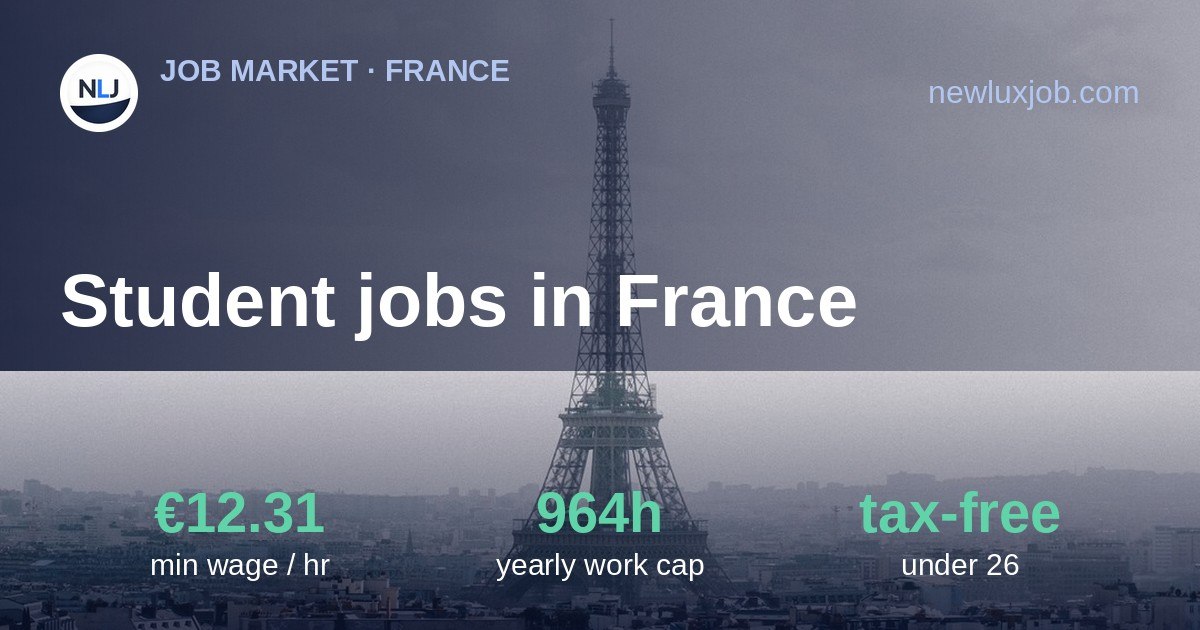
Student jobs in France: hours, pay, and how to find one in 2026
Working while studying in France, explained: the 964-hour rule, what you earn on the minimum wage, the contracts to look for, and where to find openings now.
Which jobs are open in Ireland, 15 October 2026
15 sections, 4 687 open jobs, counted on 15 October 2026. Every link goes to the page the number came from.